Round Lab Birch Sunscreen: Korean SPF 50+ vs US SPF 45
Round Lab Birch Juice sunscreen decoded: Korean SPF 50+ PA++++ vs US SPF 45 formulas, UV filters, brand tests, Korean review data and price per ml.
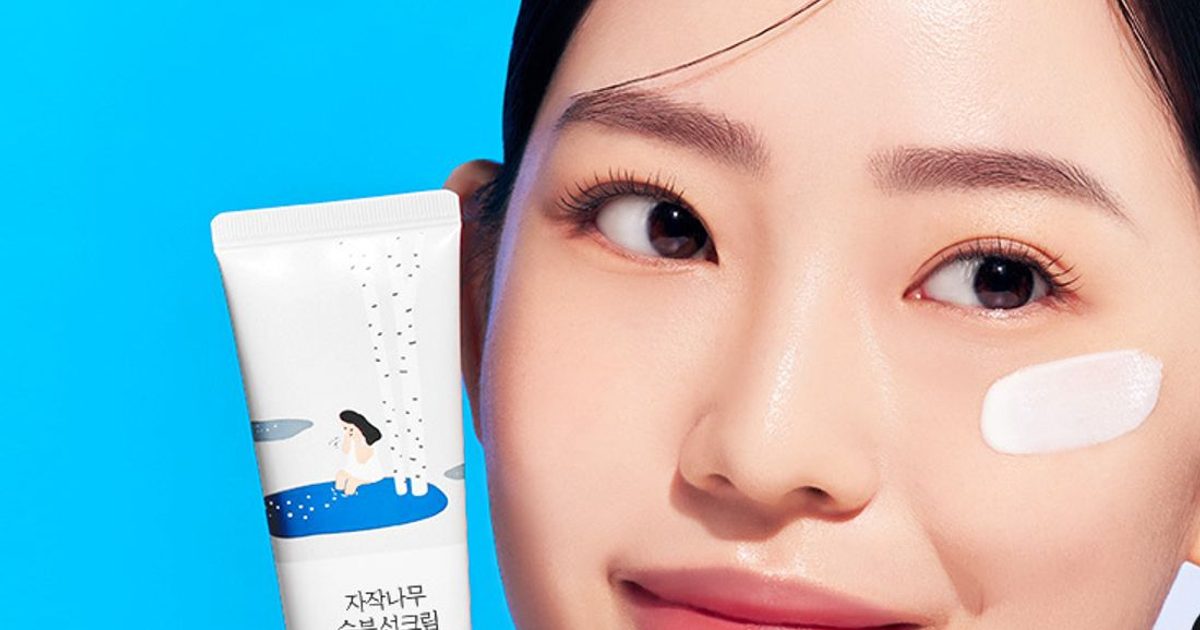
Short answer: Round Lab Birch Juice Moisturizing Sunscreen exists in two different formulas. The Korean tube is SPF 50+ PA++++ and protects with four newer-generation UV filters that the FDA has not listed for US sunscreens. The US version, Birch Moisturizing Sunscreen UVLock SPF 45 Broad Spectrum, uses avobenzone, homosalate and octisalate, all FDA-listed. Both share the birch sap, niacinamide and hyaluronic acid that give the line its moisturizer-like feel.
The Korean tube has strong Korean user data for a hydrating, low-cast finish under makeup: of 10 Korean reviews, 7 reported no white cast, 7 described a moist, moisturizer-like layer, and 6 said makeup sat well on top. Below we compare the two formulas, decode the filters, and help you pick the right one.
Korean formula vs US formula
| Korean Birch Juice Moisturizing Sunscreen | US Birch Moisturizing Sunscreen UVLock | |
|---|---|---|
| Label | SPF 50+ PA++++ | SPF 45 Broad Spectrum |
| Regulated as | Functional cosmetic (UV protection) under Korea’s Cosmetics Act | OTC sunscreen drug under FDA Monograph M020 |
| UV filters | Diethylamino hydroxybenzoyl hexyl benzoate, ethylhexyl triazone, methylene bis-benzotriazolyl tetramethylbutylphenol, diethylhexyl butamido triazone | Avobenzone 2.7%, homosalate 13.5%, octisalate 4.5% |
| Filters in the FDA monograph | None of the four | All three |
| Shared skincare ingredients | Birch sap (1,425 ppm stated), niacinamide, sodium hyaluronate, hyaluronic acid, allantoin, chamomile flower oil, sweet wormwood extract | Birch sap, niacinamide, sodium hyaluronate, hyaluronic acid, allantoin, chamomile flower oil, sweet wormwood extract |
| Water resistance claim | None | None; label says to use a water-resistant sunscreen if swimming or sweating |
| Size and price, October 6, 2026 | 50ml plus 20ml cream set, US$29.00 at Olive Young Global | 50ml, US$24.99 at Round Lab US |
Why two formulas? In the US, sunscreens are over-the-counter drugs and may only use active ingredients listed in FDA Monograph M020. The four filters in the Korean tube are widely used in Korea and the EU but are not on that list. In June 2026 the FDA finalized an order adding bemotrizinol at up to 6%, announced in the Federal Register on June 10, 2026; bemotrizinol is not in either Round Lab formula. Our explainer on why Korean sunscreens are not FDA approved covers the full regulatory history.
What the filter difference means. The Korean filters are large, photostable molecules. Diethylamino hydroxybenzoyl hexyl benzoate covers UVA; ethylhexyl triazone and diethylhexyl butamido triazone cover UVB; methylene bis-benzotriazolyl tetramethylbutylphenol is a particle filter covering UVB through long UVA. The US version relies on avobenzone for UVA, with homosalate and octisalate for UVB. PA++++ is the top Korean UVA grade; the US “Broad Spectrum” label means the product passed the FDA critical-wavelength test. Both are legitimate daily sunscreens; they are built differently.
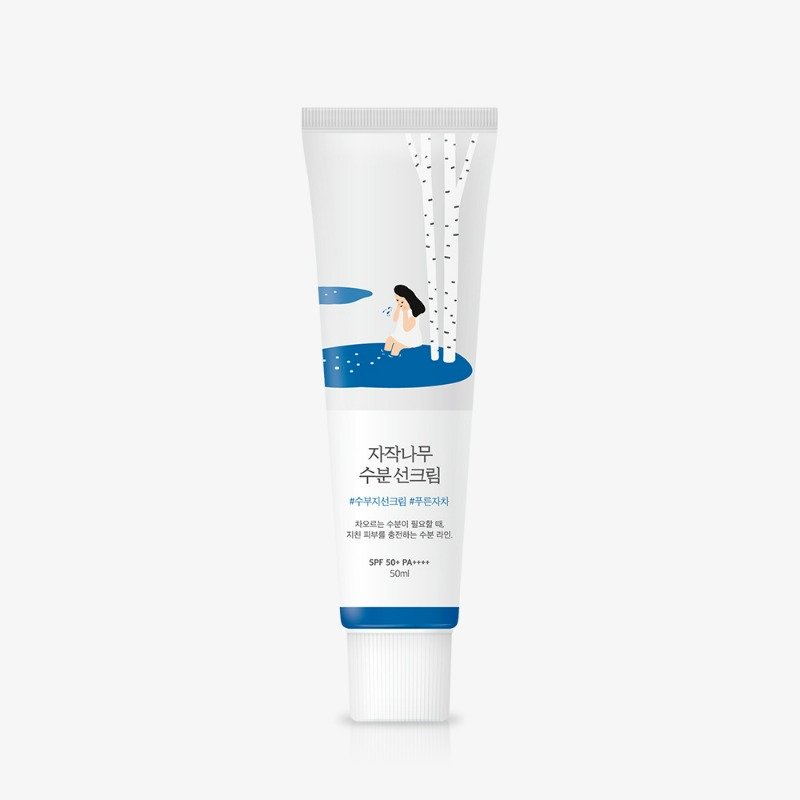
The Korean formula decoded
Round Lab’s Korean ingredient panel opens with water, dibutyl adipate and propanediol, followed by the four UV filters. Dibutyl adipate is a light ester that dissolves the solid filters and keeps the texture thin, which is a large part of why reviewers call it lotion-like. Niacinamide sits seventh. Round Lab states birch sap at 1,425 ppm (0.14%), alongside sodium hyaluronate, hyaluronic acid, glyceryl glucoside, dipotassium glycyrrhizate, allantoin and portulaca extract.
The panel also lists chamomile flower oil, pine leaf extract and sweet wormwood extract. These give the faint herbal scent that Round Lab’s US page describes as mild and earthy, and they are worth checking if you react to botanical oils. Round Lab says the Korean formula excludes oxybenzone, octinoxate, avobenzone and 4-methylbenzylidene camphor. Kolmar Korea manufactures it.
The US formula decoded
The US version’s Drug Facts label, as filed on DailyMed (revised October 30, 2025), lists its actives as avobenzone 2.7%, homosalate 13.5% and octisalate 4.5%. The inactive ingredients start with water, butyloctyl salicylate (a solvent that helps keep avobenzone dissolved), propanediol, acrylates copolymer, butylene glycol and caprylyl methicone, with niacinamide, birch sap, sweet wormwood extract and chamomile flower oil later in the list. The US label carries standard Drug Facts directions: apply 15 minutes before sun exposure and reapply at least every 2 hours.
What the research says about using a sunscreen like this
| Claim | Best evidence | Study type, size, duration | Strength |
|---|---|---|---|
| Daily sunscreen slows visible skin aging | Hughes et al., 2013 | Randomized controlled trial, 903 adults under 55, daily vs discretionary broad-spectrum sunscreen, 4.5 years; 24% less skin aging in the daily group | Moderate |
| People apply far less than the tested amount | Petersen and Wulf, 2014 | Literature review: SPF is tested at 2 mg/cm2; real-world use is about 0.39 to 1.0 mg/cm2 | Limited |
| Niacinamide improves the look of spots and redness | Bissett et al., 2005 | Double-blind split-face, 50 women, 5% niacinamide, 12 weeks | Moderate |
The biggest factor in real protection is the amount you apply. At a quarter to half of the tested amount, an SPF 50+ performs well below its label. For the face and neck, that means about 2/5 teaspoon (about 1.9 g); our guide to how much sunscreen to use on your face compares the two-finger rule with measured teaspoons. Round Lab does not publish a niacinamide percentage for either version, so read the niacinamide as a supporting ingredient.
Round Lab’s own test data (Korean formula)
Round Lab’s Korean detail pages report brand-commissioned tests run by Korea Dermatology Research Institute:
- Sustained protection: a 10-hour sun-protection-factor human test, January 10 to February 8, 2022, with 10 men and women.
- Moisture and redness: a single-use test on July 3, 2025, with 22 women, reporting a 107.29% temporary increase in a skin-moisture reading and a 21.47% reduction in a redness reading after physical irritation.
- Skin-condition measures: a human-application test from October 10 to 31, 2024, with 21 women, reporting changes in elasticity, brightness, moisture loss, pigmentation and a heat-aging protein marker.
- Safety and blue light: a 2021 primary irritation patch test on 31 adults and a 2021 in-vitro blue-light test.
The moisture result fits the reviewers’ most common description: a hydrating, moisturizer-like layer. The 10-hour figure describes sustained protection under test conditions; reapply during long outdoor days and after sweat or towel contact.
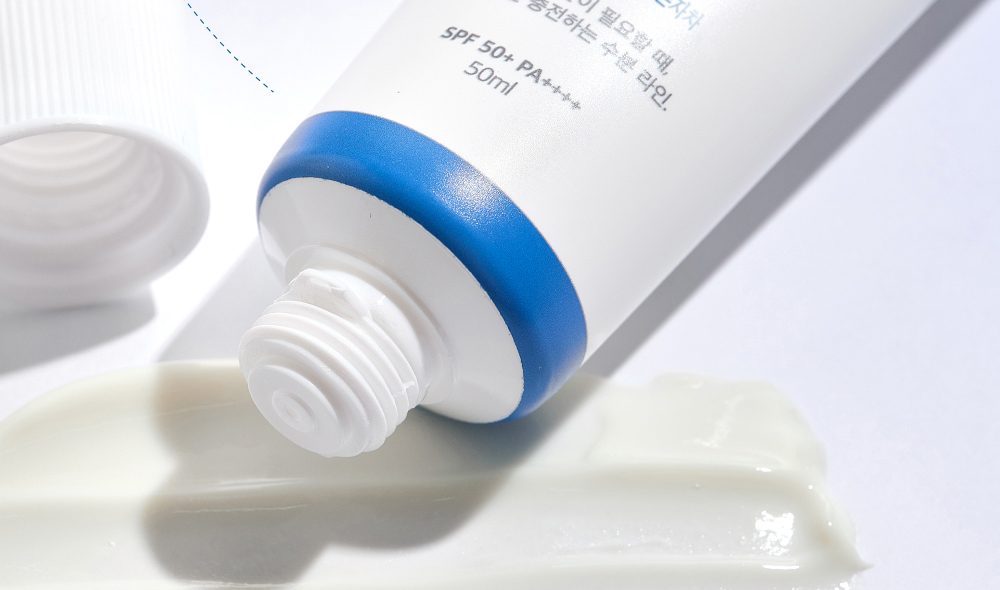
What Korean users report
We analyzed 10 self-purchased Korean reviews of the Korean tube, published between May 2020 and May 2026. The findings:
- White cast: 7 of 10 explicitly reported no white cast; 1 described a slight cast that worked like a light base before foundation.
- Feel: 7 of 10 described a hydrating, moist or moisturizer-like layer; most of the rest praised a light, fast-absorbing texture.
- Makeup: 7 of 10 discussed makeup; 6 said foundation or cushion sat well or barely pilled, and 1 dehydrated-oily reviewer blotted extra oil.
- Sensitive skin: 2 sensitive-skin reviewers reported no breakouts, including one who wore it under a mask; 1 redness-prone reviewer had a localized breakout.
- Eyes: 2 reported no eye sting; 1 reported stinging.
- Shine: 3 of 10 mentioned shine, extra oil or stickiness on oily skin, mostly in summer or under makeup.
- Finish: of 4 reviewers who discussed finish, 3 said there was no tone-up effect, which suits anyone who wants an invisible layer.
- Price: 4 of 10 called it pricey for 50ml.
Some reviews from 2020 and 2021 describe an earlier version; one reviewer notes Round Lab reformulated after a 2021 Korean labeling dispute over an earlier formula’s protection value.
| Skin type or concern | What the Korean reviews report | Buying read |
|---|---|---|
| Dry or dehydrated | All-day moisture without tightness | The clearest fit |
| Sensitive | Two reported no breakouts; one localized breakout | Patch test on the jaw first |
| Combination | Smooth spread and good makeup adhesion | Good fit; lighten the moisturizer underneath in summer |
| Oily | Works worn alone; shine under makeup in heat | Consider a matte or gel sunscreen for summer |
| White-cast concern | 7 of 10 report no cast | Strong fit for an invisible finish |
| Eye comfort | 2 no sting, 1 sting | Stop just short of the lash line |
Who it suits, and who should pick something else
It suits:
- Normal, dry, dehydrated or sensitive skin that wants a sunscreen that feels like a moisturizer.
- Makeup wearers who want an invisible, non-pilling base layer.
- Anyone frustrated by white cast from mineral sunscreens.
- US buyers who want an FDA-monograph sunscreen with the same skincare base: the US SPF 45 version.
Pick something else if:
- You swim or sweat heavily; neither version claims water resistance.
- You have very oily skin in hot weather; a matte gel sunscreen will hold up better. If your foundation slides or separates over sunscreen, see why foundation separates on the nose.
- You want a brightening or tone-up finish; Round Lab sells a separate tone-up product.
- You react to chamomile or other botanical oils; both versions contain them.
How to apply it
- Finish lighter skincare first and let it absorb for a minute, so the sunscreen does not mix into a wet layer.
- Measure about 2/5 teaspoon (about 1.9 g) for face and neck, or two finger-lengths, and apply in two thin passes.
- Spread evenly to the hairline, ears and jaw; stop just short of the lash line.
- Wait two to three minutes before makeup. If it pills, see why sunscreen pills.
- Reapply at least every 2 hours outdoors and after swimming, sweating or towel drying.
- Stop using it if redness, swelling or itching develops, as Round Lab’s label advises.
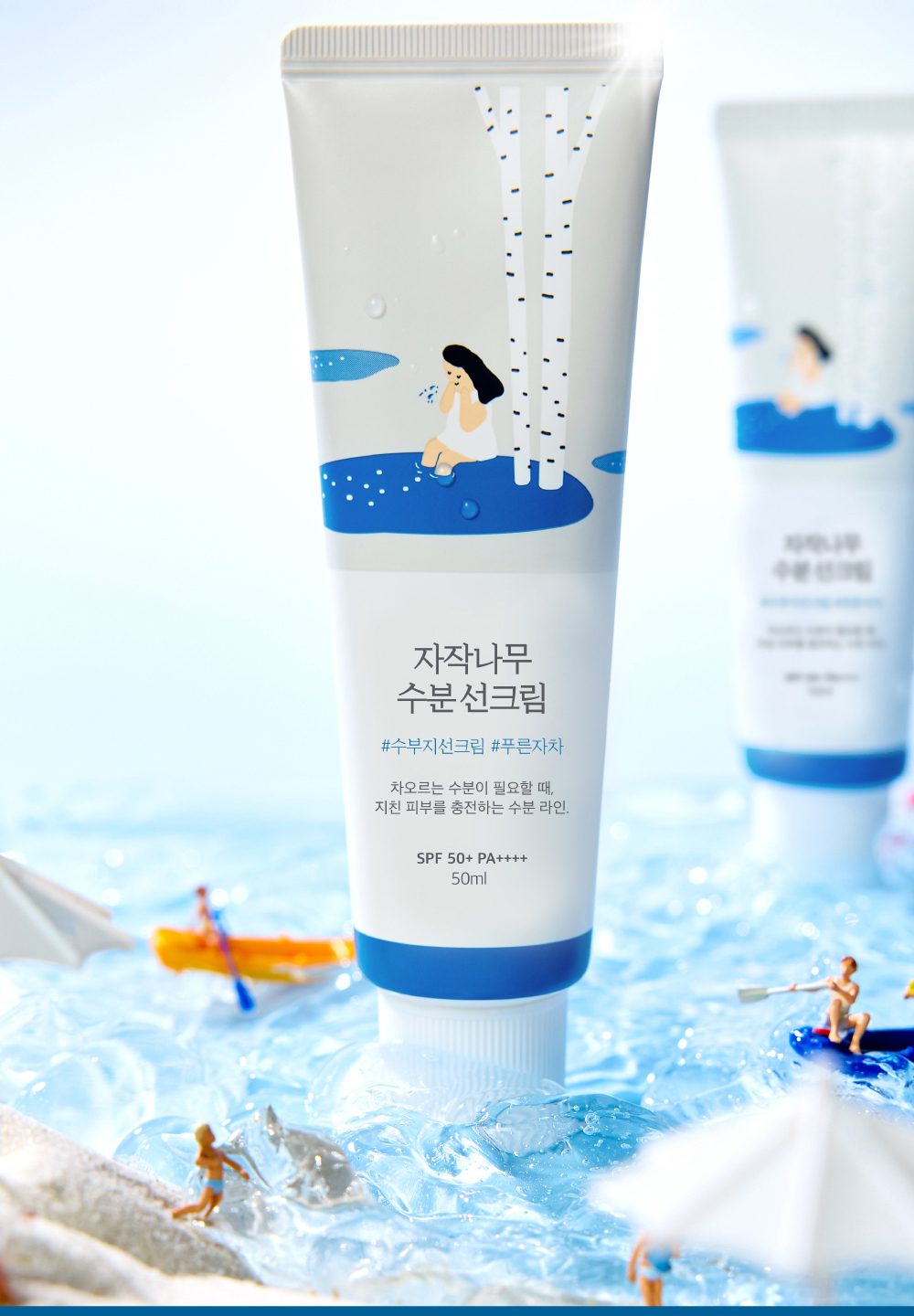
Price per ml
Prices checked October 6, 2026:
| Retailer and format | Price | Per ml of sunscreen |
|---|---|---|
| Round Lab US, US SPF 45, 50ml | US$24.99 | US$0.50 |
| Round Lab US, US SPF 45 double bundle, two 50ml tubes | US$39.00 | US$0.39 |
| Olive Young Global, Korean 50ml plus 20ml cream set | US$29.00 | US$0.58 (US$0.41 across all 70ml) |
| Olive Young Global, Korean 50ml two-tube set plus 8ml sun serum | US$28.42 sale (US$29.00 regular) | US$0.28 |
Round Lab’s Korean store listed a single Korean 50ml tube at 25,000 won, discounted to 22,500 won, when we checked on September 11, 2026.
For the Korean formula, the two-tube Olive Young set is the best value per ml on this date; the set with the 20ml cream makes sense if you also want the matching moisturizer. On Amazon, Round Lab’s own storefront sells the US SPF 45 version, and listings labeled SPF 50+ PA++++ are the Korean formula; check the label in the photos and the pack size before you buy.
The bottom line
Round Lab Birch Juice Moisturizing Sunscreen earns its reputation as a hydrating, low-cast daily sunscreen that sits well under makeup, with Korean review data to back that up. US buyers have a real choice: the US SPF 45 version meets FDA sunscreen rules and keeps the same birch, niacinamide and hyaluronic acid base, while the Korean SPF 50+ PA++++ tube offers newer-generation filters at a lower price per ml through Olive Young Global. Choose by formula, apply about 2/5 teaspoon (about 1.9 g), and reapply outdoors. For where sunscreen fits in a short routine, see the core Korean skincare routine guide.
Sources and research notes
Round Lab's Korean product page, ingredient panel and test footnotes, Round Lab's US store page and Drug Facts for the SPF 45 formula, Olive Young Global and Round Lab US prices, the June 2026 FDA sunscreen monograph order, peer-reviewed studies on daily sunscreen use and application amount, and ten self-purchased Korean reviews published May 2020 to May 2026, checked on the date shown.
Source record date: 2026-10-06. Prices and availability are as of that date.
- Round Lab Korea product page for the 50ml sunscreen
- Round Lab detail image with test footnotes and claims
- Round Lab detail image with the full Korean ingredient panel
- Round Lab US: Birch Moisturizing Sunscreen UVLock SPF 45 Broad Spectrum, ingredients and Drug Facts directions
- Round Lab sun care line guide
- Olive Young Global: Korean 50ml plus 20ml cream set
- Olive Young Global: Korean 50ml two-tube set plus 8ml sun serum
- Federal Register, June 10, 2026: FDA final order adding bemotrizinol to sunscreen Monograph M020
- Hughes et al., Ann Intern Med 2013: sunscreen and prevention of skin aging, randomized trial (n=903, 4.5 years)
- Petersen and Wulf, Photodermatol Photoimmunol Photomed 2014: application of sunscreen, theory and reality
- Bissett et al., Dermatol Surg 2005: topical 5% niacinamide split-face trial (n=50, 12 weeks)
- Selected Korean review 1
- Selected Korean review 2
- Selected Korean review 3
- Selected Korean review 4
- Selected Korean review 5
- Selected Korean review 6
- Selected Korean review 7
- Selected Korean review 8
- Selected Korean review 9
- Selected Korean review 10
- DailyMed Drug Facts label: Round Lab Birch Moisturizing Sunscreen SPF 45 (revised 2025-10-30)


Frequently asked questions
Is the Korean Round Lab Birch sunscreen the same as the US version?
No. The Korean tube is SPF 50+ PA++++ and uses four UV filters that are not in the FDA sunscreen monograph. The US Birch Moisturizing Sunscreen UVLock SPF 45 Broad Spectrum uses avobenzone, homosalate and octisalate, which are FDA-listed. Both share birch sap, niacinamide and hyaluronic acid.
Does Round Lab Birch sunscreen leave a white cast?
Both versions are chemical-filter sunscreens, which do not contain the white mineral pigments that cause cast. Of 10 Korean reviews of the Korean tube, 7 explicitly reported no white cast and 1 described a slight cast that worked like a light base.
Is it water resistant?
Neither version carries a water-resistance claim. The US label tells you to use a water-resistant sunscreen if swimming or sweating, so treat it as a daily-wear sunscreen and reapply after sweat or towel contact.
Does it sting the eyes?
Of 10 Korean reviews, 2 said it did not sting their eyes and 1 reported stinging. Keep the formula slightly away from the lash line if chemical sunscreens have stung your eyes before.
Which version should a US buyer choose?
If you want a sunscreen that meets FDA sunscreen rules, choose the US SPF 45 version, US$24.99 for 50ml on Round Lab's US store on October 6, 2026. The Korean SPF 50+ tube suits buyers who specifically want its newer-generation filters and PA++++ rating.