COSRX BHA Blackhead Power Liquid: Formula and Who It Suits
COSRX BHA Blackhead Power Liquid decoded: 4% betaine salicylate, 2% niacinamide, the salicylic acid math, US and Korean rules, Korean review data and price.
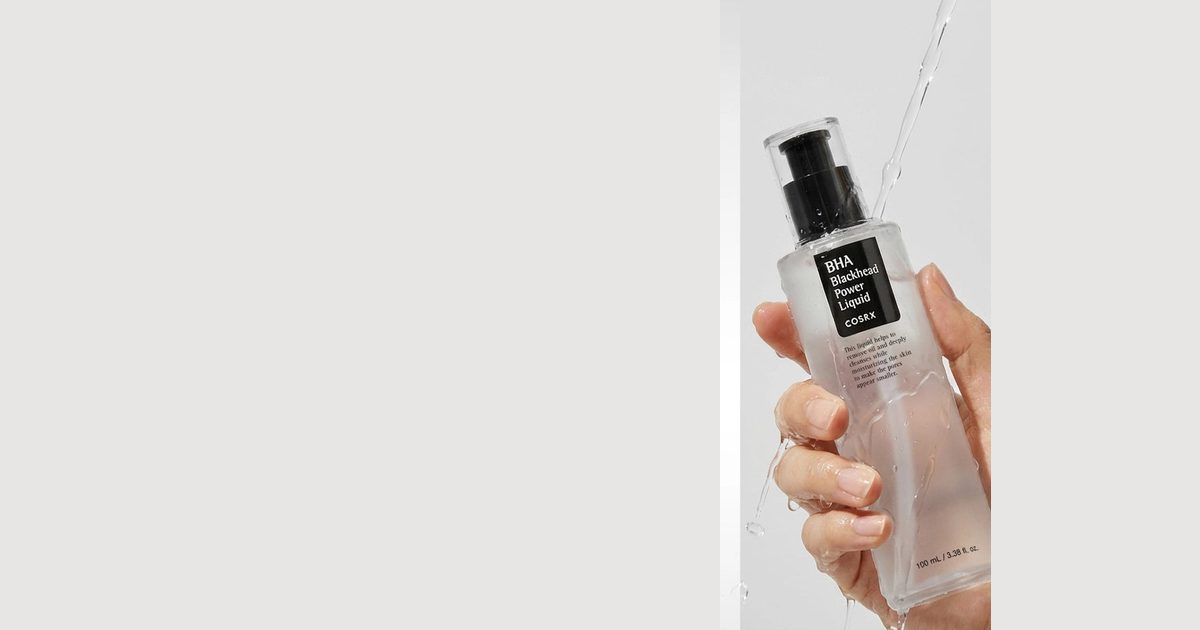
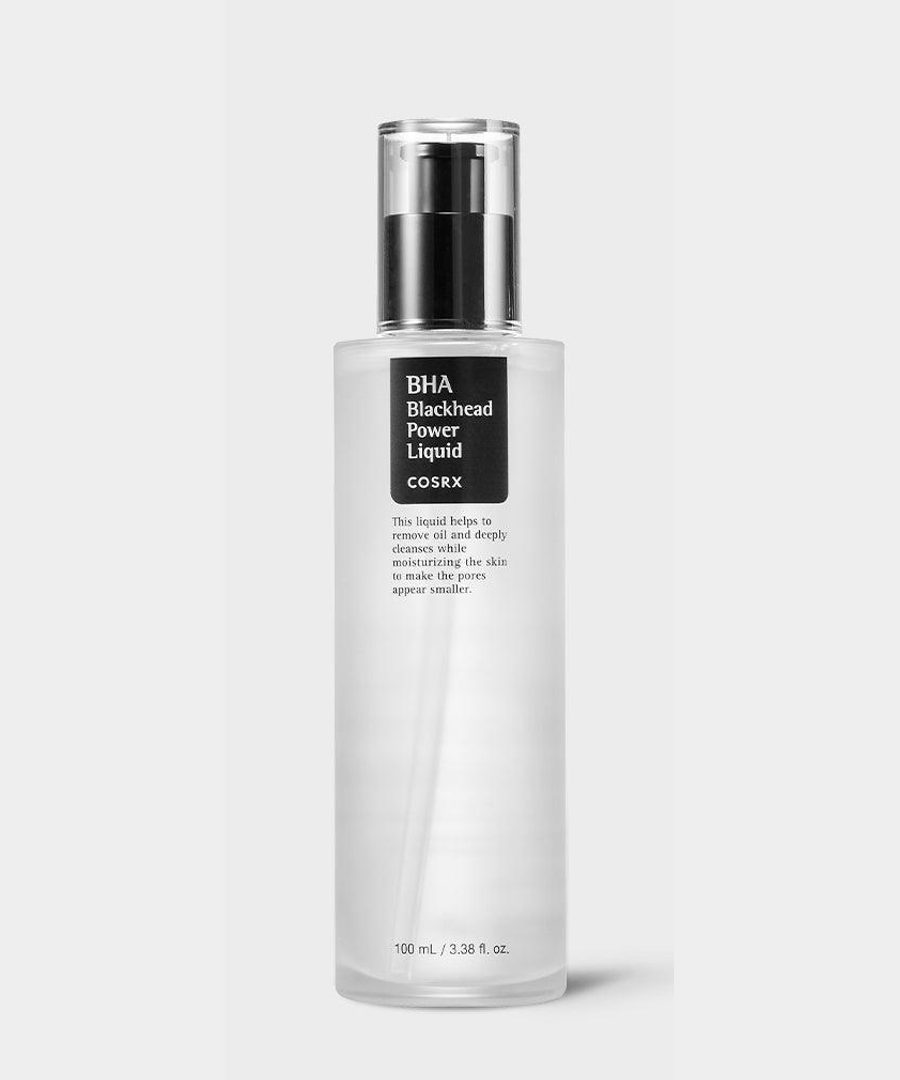
Short answer: COSRX BHA Blackhead Power Liquid is a 4% betaine salicylate and 2% niacinamide exfoliating liquid, which works out to about 2.2% salicylic acid by weight. That puts it at the strong end of leave-on BHAs, which is why COSRX recommends starting at two to three times a week. Used that way, it suits oily, combination and congested skin best, and dry skin that follows it with a moisturizer.
The name promises “blackheads out”; the formula and the Korean review data point to gradual results. Smoother texture and less oil were the most common positives in the reviews; visible blackhead change was gradual.
As an Amazon Associate I earn from qualifying purchases.
The formula decoded
COSRX’s official US page lists ten ingredients, read on October 6, 2026:
| Position | Ingredient | Role |
|---|---|---|
| 1 | Salix alba (willow) bark water | Base; the brand-supplied Ulta listing states 68% |
| 2 | Butylene glycol | Humectant and solvent |
| 3 | Betaine salicylate | The BHA; 4% per the brand-supplied Ulta listing |
| 4 | Niacinamide | Vitamin B3; 2% per the brand-supplied Ulta listing |
| 5 | 1,2-Hexanediol | Humectant and preservative booster |
| 6 | Arginine | Amino acid; adjusts pH |
| 7 | Panthenol | Provitamin B5; humectant and skin conditioner |
| 8 | Sodium hyaluronate | Hyaluronic acid salt; holds water |
| 9 | Xanthan gum | Thickener that gives the liquid slight slip |
| 10 | Ethyl hexanediol | Solvent and conditioning agent |
Betaine salicylate is salicylic acid paired with betaine. It is a complex of salicylic acid (molecular weight 138.1) and betaine (117.1), so salicylic acid makes up about 54% of its weight. We calculated that 4% betaine salicylate delivers roughly 2.2% salicylic acid by mass. That is a useful benchmark: the FDA acne monograph allows salicylic acid at 0.5% to 2% in over-the-counter acne products. The equivalence is by weight; the finished liquid’s pH, which COSRX does not publish, also shapes how much free acid is available to the skin.
There is no fragrance, essential oil or alcohol on the list. The formula is short, which makes it easy to check against known sensitivities. Willow bark water contains salicin, a plant compound related to salicylates, so anyone allergic to aspirin or salicylates should skip this product.
Niacinamide and panthenol balance the acid. The 2% niacinamide matches the concentration in the best-known niacinamide oil-control trial, and panthenol and sodium hyaluronate add humectancy to offset some of the drying effect of the acid.
How US and Korean rules treat this product
| Question | United States | South Korea |
|---|---|---|
| Can a BHA product claim to treat acne? | Only as an OTC acne drug. The FDA monograph (21 CFR 333.310) lists salicylic acid at 0.5% to 2% as an acne active ingredient | Acne-skin relief is a registered functional-cosmetic category, limited to rinse-off cleansing products under the Cosmetics Act Enforcement Rule, Article 2 |
| How is this liquid sold? | As a cosmetic exfoliant with no Drug Facts panel; betaine salicylate is not a monograph acne active | As a general cosmetic, since a leave-on liquid falls outside the rinse-off acne category |
| What the label can say | Appearance claims: clearer-looking pores, smoother texture, oil control | Same: cosmetic appearance claims |
The practical result: COSRX describes what the liquid does for the look of pores and texture, and leaves acne treatment claims to drug or functional products. For inflamed or persistent acne, a board-certified dermatologist can recommend a regulated treatment.
What the research says
| Claim | Best evidence | Study type, size, duration | Strength |
|---|---|---|---|
| Salicylic acid reduces comedones | Levesque et al., 2011 | Split-face, 20 adults with comedonal acne, salicylic acid peels on one side vs lipohydroxyacid peels on the other (no untreated side); non-inflammatory lesions fell 48.5% on the salicylic acid side by day 98 | Limited |
| Topical 2% niacinamide lowers facial oil | Draelos et al., 2006 | Double-blind, placebo-controlled, 100 Japanese adults for 4 weeks; plus 30 white adults split-face for 6 weeks | Moderate |
| Niacinamide improves the look of dark spots and redness | Bissett et al., 2005 | Double-blind split-face, 50 women, 5% niacinamide, 12 weeks | Moderate |
| Salicylic acid is an effective acne active at 0.5% to 2% | FDA acne monograph, 21 CFR 333.310 | Regulatory finding of safety and effectiveness for OTC use | Guidance |
Salicylic acid is oil-soluble, so it moves into the oily lining of pores and loosens the plug of skin cells and sebum that forms a blackhead. In the Levesque split-face study, salicylic acid peels cut non-inflammatory lesions (blackheads and whiteheads) by about half over 14 weeks, with good tolerance. A daily leave-on liquid works at a lower strength over a longer time, which matches the gradual results Korean reviewers describe.
In the Draelos trial, the Japanese group using 2% niacinamide had a significantly lower sebum excretion rate at weeks 2 and 4 than the placebo group, and the US group had lower surface oil after 6 weeks. That supports the “less oil” reports below.
If your concern is the red or brown marks left after a breakout rather than blackheads, the approach is different; see PIE vs PIH: red vs brown acne marks.
COSRX’s own test data
COSRX’s 2026 product media on Olive Young Global, recorded on September 7, 2026, reports a self-assessment from an independent clinical study of 20 subjects; the media does not state the study year or full regimen. COSRX also positions the liquid for “mid-level acid users,” and its official page describes the targets as clogged and enlarged pores, blackheads, T-zone care and oily, breakout-prone skin.
What Korean users report
We analyzed ten non-sponsored Korean reviews published on Hwahae, the Korean ingredient-and-review app, from August 2020 to September 2024, across oily, dry and combination skin filters. The findings:
- 5 of 10 described a watery, light or comfortable texture; oily-skin reviewers called it silky, not greasy, and easy to absorb.
- 6 of 10 described the blackhead change as modest, slow or not yet visible, often alongside smoother texture.
- Several reviewers reported less oil and a smoother surface, especially around the nose.
- A dehydrated, acne-prone reviewer used it as a targeted nose step with no stinging and a slightly brighter look to the area.
- 3 of 10 described irritation, itching, redness or dryness, or cut back how often they used it; one combination-sensitive reviewer found it tacky and slow to absorb on her skin.
| Skin type or concern | What the Korean reviews report | How to use that |
|---|---|---|
| Oily, acne-prone or high-sebum | Water-light feel, less perceived oil, smoother texture | The best match; start three nights a week on the T-zone |
| Combination or dehydrated | Gentle exfoliation on targeted areas; one tackiness report | Apply to the nose and chin only; keep other layers simple |
| Dry or dry-sensitive | Texture improvement with moisturizer; occasional tightness on the face | Twice a week, followed by a rich moisturizer |
| Blackheads | 6 of 10 describe a modest or gradual change | Judge after six to eight weeks of regular use |
The pattern fits a roughly 2% salicylic-equivalent leave-on: surface smoothness and oil control show up first, and pore plugs loosen over weeks.
Who it suits, and who should pick something else
It suits:
- Oily and combination skin with visible blackheads, enlarged-looking pores or a shiny T-zone.
- People who want an exfoliant without fragrance or alcohol, in a pump that doses consistently.
- Experienced acid users replacing a 2% salicylic acid liquid.
- Dry skin that wants occasional texture smoothing and is willing to use it twice a week with a moisturizer.
Pick something else if:
- Your skin is currently stinging, flaking or sunburned; repair the barrier first with a moisturizer such as AESTURA Atobarrier 365.
- You are pregnant or breastfeeding; COSRX advises avoiding AHAs and BHAs.
- You are allergic to aspirin or salicylates.
- You already use a retinoid, vitamin C or another acid most nights and do not want to alternate.
- Your main concern is red marks or brown spots; read PIE vs PIH for ingredients that target those.
How to use it
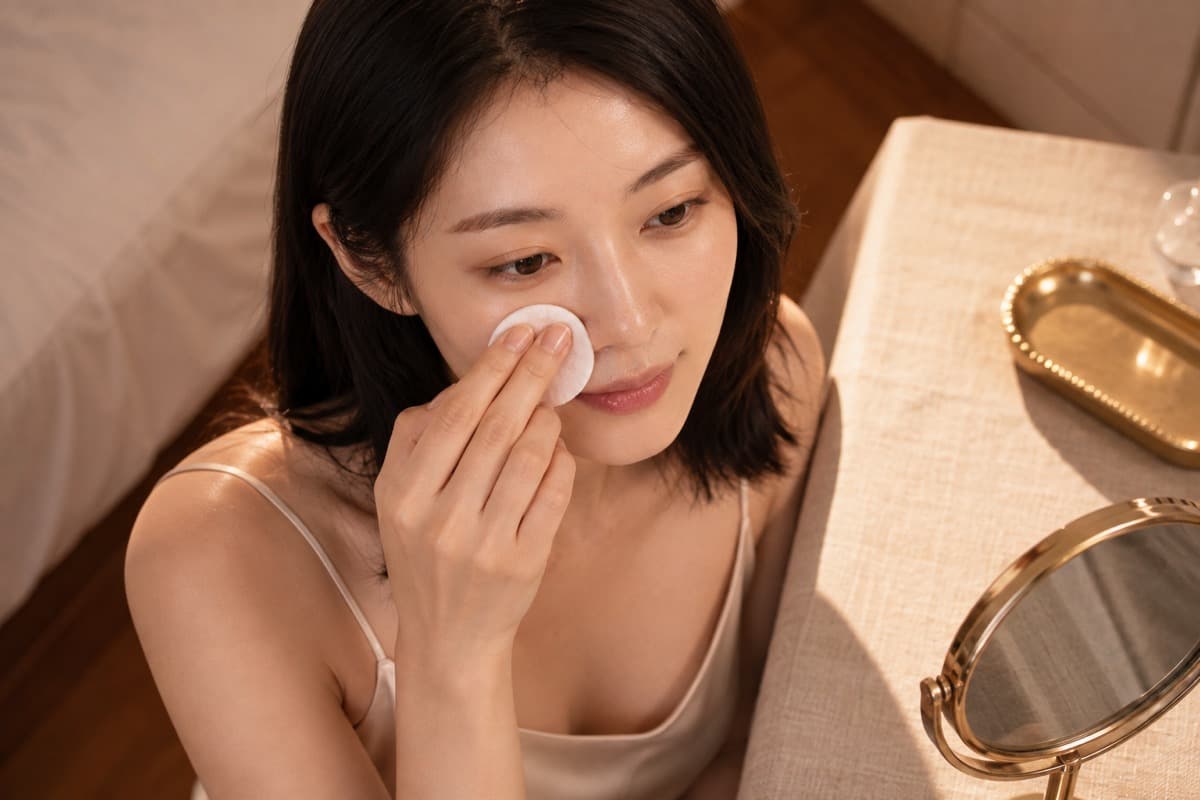
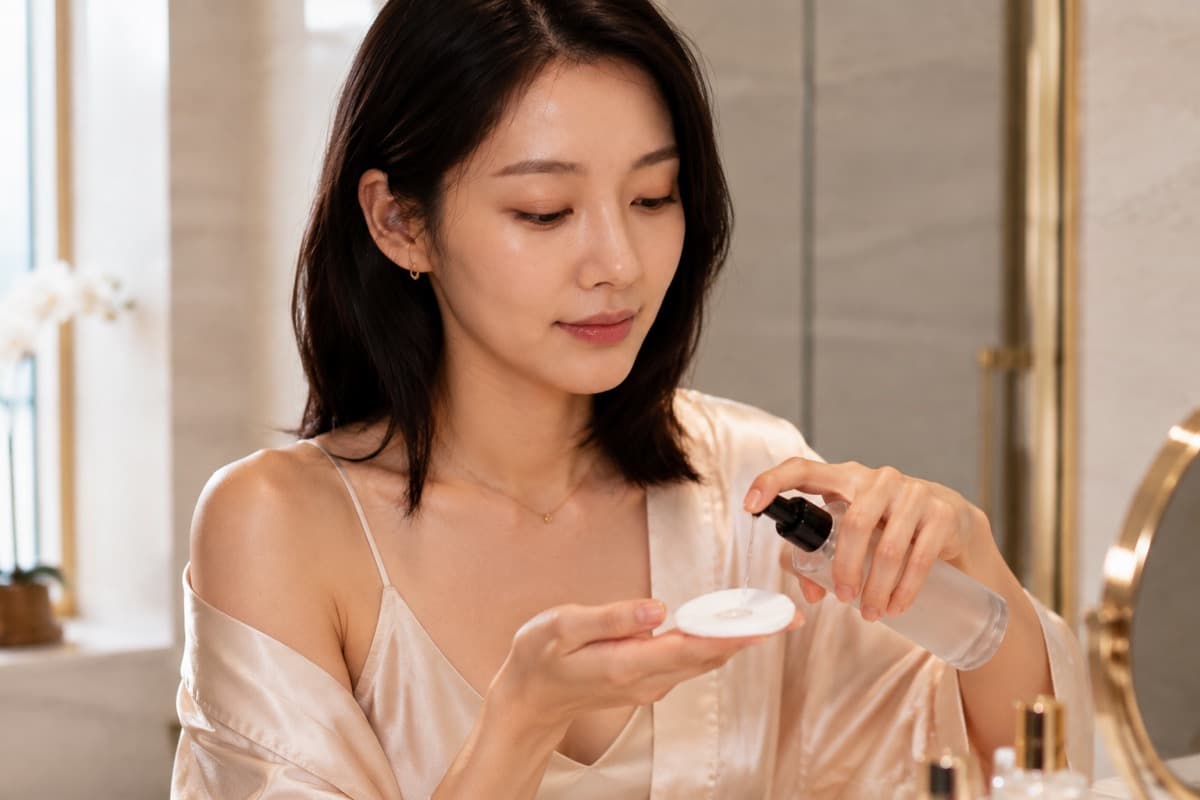
COSRX’s directions: after cleansing, use in the toner or essence step; let it absorb fully before the next product; start two to three times a week and build up as skin allows; wear sunscreen during the day.
- Cleanse and pat skin dry.
- Pump one press onto a cotton pad or fingertips and apply a thin layer to the nose, chin and forehead, or the whole face if your skin is oily.
- Wait one to two minutes until the surface no longer feels wet.
- Follow with a moisturizer. For dry skin, use a richer cream.
- Use it at night at first. If you use it in the morning, finish with a broad-spectrum SPF 30 or higher; see how much sunscreen to use on your face.
- Keep retinoids, vitamin C and other acids on different nights, as COSRX advises.
- After two weeks without dryness, add one more night per week.
If redness or itching lasts beyond a day or two, stop and let your skin settle. See a board-certified dermatologist for persistent irritation or acne.
Price per mL
Checked October 6, 2026: Ulta lists the 100 mL bottle at US$25.00, or US$0.25 per mL, and COSRX’s official US store lists the same US$25.00 (shown as backordered that day). Olive Young Global listed it at US$20.00 on sale, US$0.20 per mL, when we checked on September 7, 2026.
At two to three uses a week on the T-zone, a 100 mL bottle lasts many months, so the per-use cost is low. On Amazon, confirm the listing is the 100 mL single bottle before comparing prices.
The bottom line
COSRX BHA Blackhead Power Liquid delivers about 2.2% salicylic acid by weight plus 2% niacinamide in a fragrance-free, ten-ingredient liquid. That is a well-supported pairing for oily, congested skin, with oil control and smoother texture arriving first and blackhead change building over weeks. Start slowly, moisturize afterward, keep it apart from retinoids and vitamin C, and it earns a long-term place in an oily or combination routine. For where it fits in a full routine, see our core Korean skincare routine guide.
Related reading
- Sebaceous filaments vs blackheads for telling normal pore lining from a true blackhead before you exfoliate.
Sources and research notes
COSRX's official US product page, directions and full ingredient list, the brand-supplied Ulta listing with betaine salicylate and niacinamide concentrations, the FDA acne monograph and Korea's functional-cosmetic rule, controlled trials on salicylic acid and niacinamide, and ten Korean Hwahae reviews, checked on the date shown.
Source record date: 2026-10-06. Prices and availability are as of that date.
- COSRX official US product page with ingredients and directions
- Ulta listing with brand-supplied 4% betaine salicylate and 2% niacinamide
- Olive Young Global: 100 mL bottle and COSRX product media
- FDA acne drug monograph, 21 CFR 333.310: acne active ingredients
- Korea Cosmetics Act Enforcement Rule, Article 2: the 11 functional-cosmetic categories (version effective April 2, 2026)
- Levesque et al., J Cosmet Dermatol 2011: salicylic acid vs lipohydroxyacid peels in comedonal acne (n=20)
- Draelos et al., J Cosmet Laser Ther 2006: 2% niacinamide and facial sebum (n=100 and n=30)
- Bissett et al., Dermatol Surg 2005: topical 5% niacinamide split-face trial (n=50, 12 weeks)
- Hwahae Korean reviews, oily skin
- Hwahae Korean reviews, dry skin
- Hwahae Korean reviews, combination skin
- Hwahae Korean reviews, all
- Hwahae Korean reviews, skin-concern filter
Frequently asked questions
How strong is COSRX BHA Blackhead Power Liquid?
The brand-supplied Ulta listing states 4% betaine salicylate and 2% niacinamide. By molecular weight, 4% betaine salicylate carries about 2.2% salicylic acid, close to the 2% ceiling for salicylic acid in US over-the-counter acne products.
Is it too harsh for dry skin?
It works for dry skin on a slow schedule. COSRX recommends two to three times a week, building up gradually. In ten Korean reviews, several dry and sensitive users found it manageable with moisturizer afterward, and three described irritation, dryness or redness or cut back how often they used it.
Does it remove blackheads?
It is a gradual exfoliant, not an extractor. Six of ten Korean reviewers described the blackhead change as modest, slow or not yet visible, while several reported smoother texture and less oil. Expect weeks of regular use.
Can I use it with vitamin C or retinol?
COSRX advises against using it with other acids, retinoids or vitamin C. If you use those, put them on different nights or different times of day.
Is it safe during pregnancy?
COSRX tells pregnant or breastfeeding shoppers to avoid AHAs and BHAs. Ask your obstetrician or a board-certified dermatologist before using any salicylate product during pregnancy.