Anua PDRN Capsule 100 Serum: Formula, Evidence, Who It Suits
Anua PDRN Hyaluronic Capsule 100 Serum decoded: full INCI, 100 ppm PDRN, eight hyaluronic acid forms, brand test data, Korean review data and price per mL.
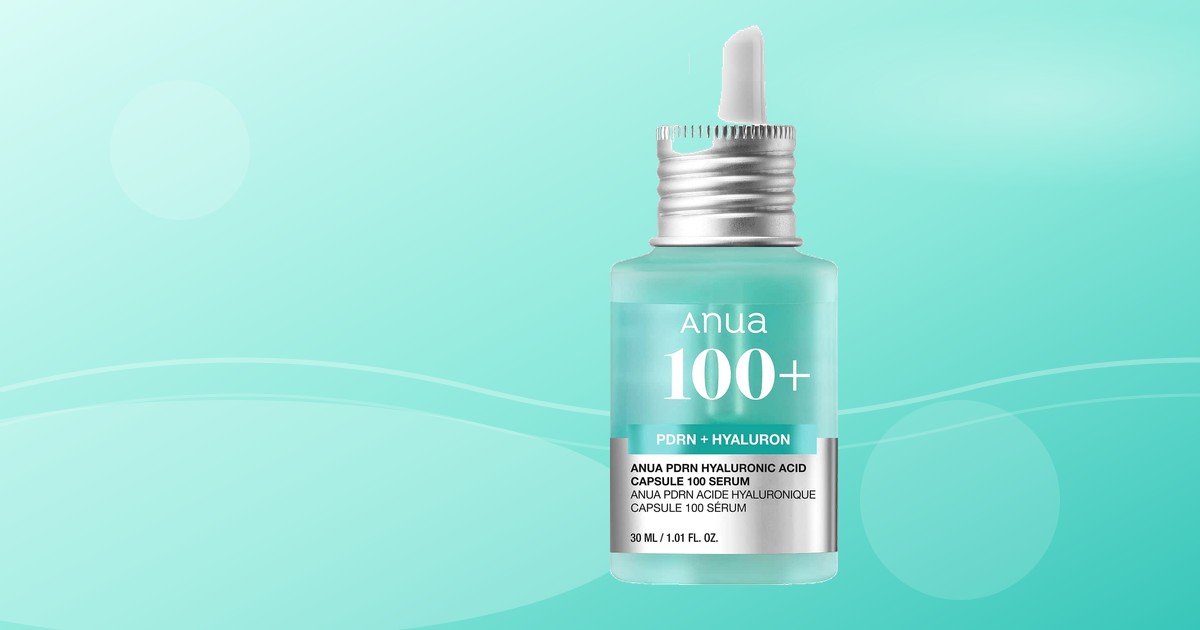
Short answer: Anua PDRN Hyaluronic Capsule 100 Serum is a hydration serum first and a PDRN serum second. Its first four ingredients are water and three humectants, it carries eight forms of hyaluronic acid, and the brand-supplied Ulta listing puts PDRN at 100 ppm (0.01%). Of eight Korean reviews, all eight described better hydration and seven described a quick, low-stick finish in a thin layer.
That makes it a strong pick for dry, combination or dehydrated skin that wants glow without a cream texture. Oily skin in hot weather, and anyone buying it as a substitute for in-clinic PDRN, should read the evidence below first.
The formula decoded
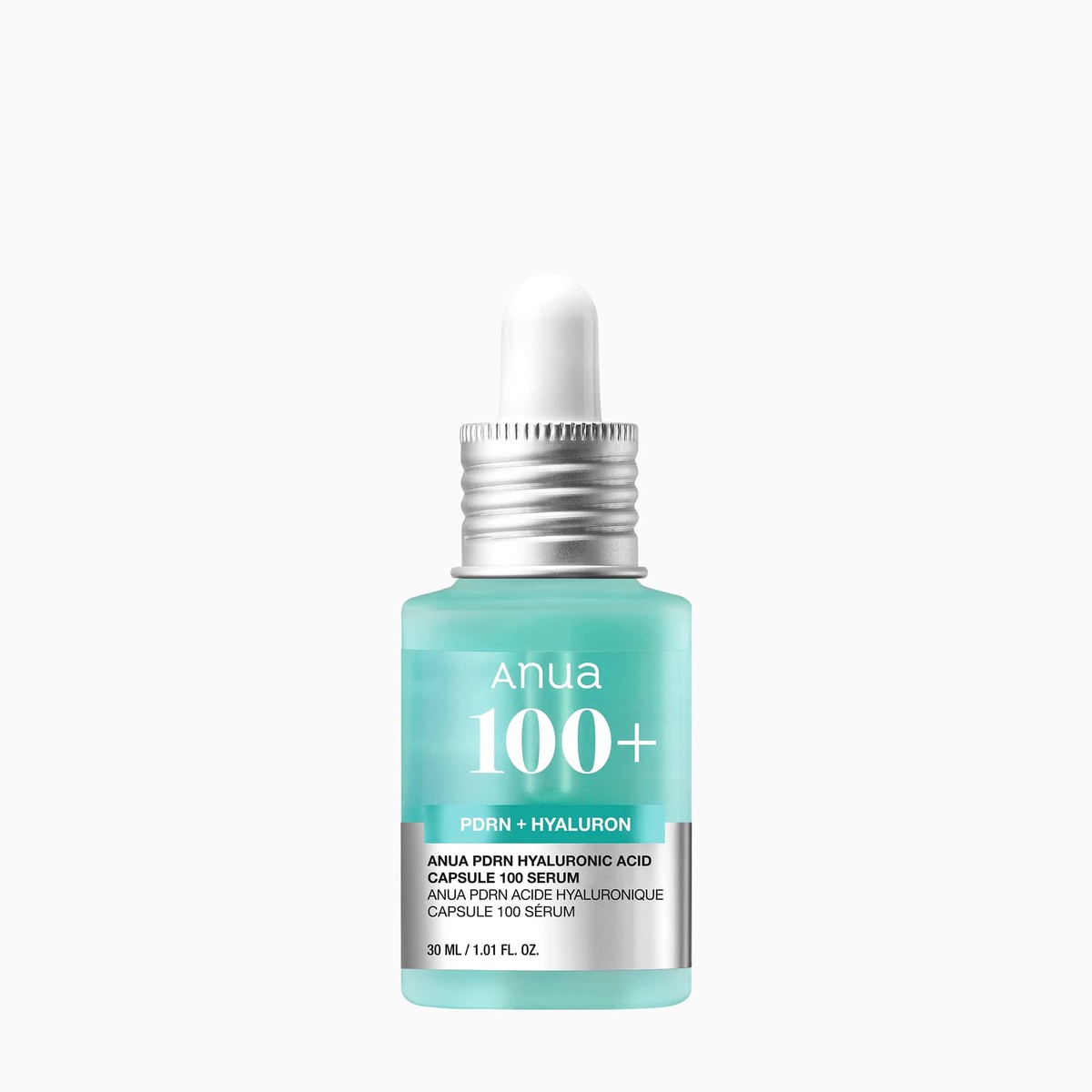
We read the full ingredient list on Anua’s official US product page on October 6, 2026. It has 34 ingredients. Cosmetic labels list ingredients in descending order of concentration down to 1%, so position tells you roughly where each ingredient sits.
| Position | Ingredient | What it does in this formula |
|---|---|---|
| 1-4 | Water, butylene glycol, propanediol, glycerin | Base and humectants; these four do most of the hydrating work |
| 5 | Hydrolyzed hyaluronic acid | Low-molecular-weight hyaluronic acid; binds water in the upper skin layers |
| 6 | 1,2-Hexanediol | Humectant and preservative booster, typically used at low single-digit percentages |
| 7 | Niacinamide | Vitamin B3; Anua does not disclose its percentage |
| 8-12 | Glyceryl oleate, lauryl glucoside, myristyl glucoside, polyglyceryl-6 laurate, hydrogenated lecithin | Emulsifiers and lecithin that form the capsule-like particles and the soft slip |
| 13-14 | Glutathione, hydrolyzed collagen | Antioxidant peptide and a film-forming, moisture-holding protein fragment |
| 15 | Sodium hyaluronate | Higher-molecular-weight hyaluronic acid salt that holds water on the surface |
| 16-20 | Coptis japonica root, adenosine, neem leaf and flower, coccinia fruit extracts | Botanical extracts plus adenosine, a skin-conditioning ingredient |
| 21 | Sodium DNA | The PDRN; Anua says it is derived from salmon DNA |
| 22-34 | Eggplant extract, six more hyaluronic acid forms, holy basil, turmeric and coralline extracts, citric acid, sodium citrate, pentylene glycol | Supporting humectants, extracts and pH adjusters |
Three points stand out.
This is a multi-weight hyaluronic acid serum. We counted eight hyaluronic acid forms: hydrolyzed hyaluronic acid, sodium hyaluronate, hyaluronic acid, hydrolyzed sodium hyaluronate, hydroxypropyltrimonium hyaluronate, potassium hyaluronate, sodium hyaluronate crosspolymer and sodium acetylated hyaluronate. Smaller fragments sit deeper in the outer skin layer, larger and crosslinked forms hold water on the surface, and the cationic form clings to skin. The brand-supplied Ulta listing also describes 3% hyaluronic acid.
PDRN is present at a low level. Ulta’s brand-supplied copy states PDRN at 100 ppm, which is 0.01%. Sodium DNA sits 21st, after several botanical extracts, which fits that number. The “100” in the product name matches the stated ppm.
There is no fragrance on the list. The official list shows no parfum or fragrance allergens. It does include plant extracts such as turmeric, neem and holy basil, which matters for anyone who reacts to specific botanicals.
What the research says about the key ingredients
| Claim | Best evidence | Study type, size, duration | Strength |
|---|---|---|---|
| Topical hyaluronic acid improves skin hydration | Pavicic et al., 2011 | Randomized, vehicle-controlled, 76 women aged 30-60, 0.1% HA creams of five molecular weights, twice daily for 60 days | Moderate |
| Low-molecular-weight HA reduces fine-wrinkle depth | Same trial: 50 and 130 kDa groups | 60 days, periocular area | Moderate |
| Niacinamide improves the look of spots, redness and fine lines | Bissett et al., 2005 | Double-blind split-face, 50 women, 5% niacinamide vs vehicle, 12 weeks | Moderate |
| Niacinamide lowers surface oil | Draelos et al., 2006 | 100 Japanese adults, 2% vs placebo, 4 weeks; 30 white adults split-face, 6 weeks | Moderate |
| Topical PDRN improves the look of photodamaged skin | Ye et al., 2026 | Lab, ex vivo and a 28-day randomized double-blind split-face trial of a 0.1% PDRN eye cream vs 0.1% retinol | Limited |
In the Pavicic trial, every hyaluronic acid cream improved hydration and elasticity measurements against the vehicle side, and the two smallest molecular weights also reduced measured wrinkle depth after 60 days. Anua’s formula uses several of these weights, though at undisclosed concentrations.
PDRN (polydeoxyribonucleotide) is best known as an injectable in Korean clinics. The 2026 study by Ye and colleagues is one of the first to test a topical PDRN cream in people: a medium-length PDRN at 0.1% outperformed 0.1% retinol on periocular wrinkle and dermal-density measurements over 28 days. That is a promising signal for topical PDRN, at ten times the concentration Anua states. Read the PDRN in this serum as a supporting ingredient, and the humectants as the main act.
Niacinamide’s evidence comes from 2% to 5% studies. Anua does not publish its niacinamide level; the ingredient sits right after 1,2-hexanediol. For pairing it with other actives, see whether niacinamide and azelaic acid can be used together.
Anua’s own test data
Anua’s product pages report two results immediately after one use: an 8.93% improvement in temporary hydration and moisture plumping, and a 24.64% improvement in temporary deep-skin hydration. The brand-supplied Ulta listing times these at within 3 seconds of application and adds two 30-minute results: a 1.69% improvement in skin absorption ratio and a 3.14% improvement in absorption rate and depth. It also states that a skin irritation test was completed.
Anua’s Olive Young Global listing, as recorded on September 4, 2026, attributed the hydration results to a test of 23 participants aged 40 to 68. Anua does not publish the study year or testing lab on the pages we read. These are single-use, brand-reported measurements: they describe how much more water the skin surface held right after application, which is exactly what a humectant-rich serum is designed to do.
Anua also labels the serum non-comedogenic, low irritation, clinically tested and free of artificial color.
What Korean users report
We analyzed eight non-sponsored Korean user reviews of this serum, published on Korean review platforms from May to August 2026. The findings:
- 8 of 8 described better hydration, less dryness or relief from a tight feeling.
- 7 of 8 described quick absorption, light spread, low stickiness or a clean finish.
- 5 of 8 described using it under makeup, in two thin layers or alongside another step, with smoother base makeup or a richer night routine as the result.
- Several reviewers noted the very fluid texture runs quickly from the dropper, and recommended dispensing into the palm.
- One oily-skin reviewer found it comfortable in winter and too rich for summer; one combination-skin reviewer noticed slight tack and preferred a light hand.
| Self-described skin type | Reviews | What they reported | What to watch |
|---|---|---|---|
| Combination or dehydrated-oily | 2 | Fast spread, hydration and a good pre-makeup finish | Runny texture; slight tack or extra slip when over-applied |
| Oily | 2 | Strong hydration without a thick cream feel | One reviewer found it too heavy for summer |
| Dry or sensitive-leaning | 2 | Less tightness, comfortable layering, more cushion | One reviewer noted mild tack after repeated layers |
| Not stated | 2 | Hydration and a soft, luminous finish | Finish depends on amount |
The pattern matches the formula. A humectant-heavy base explains the unanimous hydration reports; the lecithin and glucoside emulsifiers explain why heavier amounts or several layers move the finish toward glossy.
Who it suits, and who should pick something else
It suits:
- Dry, dehydrated or combination skin that wants hydration and a dewy finish without a cream.
- Makeup wearers who like a smooth, slightly luminous base under foundation.
- People who want a fragrance-free hydrating step and are comfortable with plant extracts.
- Routines in cooler or drier months, or in air-conditioned offices.
Pick something else if:
- You have oily skin in a hot, humid climate and want a matte finish. A lighter, short-list hydrator such as the SKIN1004 Madagascar Centella Ampoule has a thinner feel.
- Your skin needs barrier lipids rather than water. A ceramide cream like AESTURA Atobarrier 365 addresses that directly.
- You are buying for PDRN specifically and want a concentration closer to the levels tested in published topical studies.
- You avoid salmon-derived or fish-derived ingredients.
How to use it
Anua’s directions: apply a few drops after toner, pat in, and use morning and night before moisturizer, with SPF 30 or higher during the day.
- Dispense two to four drops into your palm rather than straight onto the face; the texture is very fluid.
- Press across cheeks, forehead and jaw, then pat until the surface feels settled, about a minute.
- Add a second thin layer only where skin still feels tight, or use two to three layers at night.
- Follow with moisturizer to hold the water in, especially in dry air.
- In the morning, finish with a broad-spectrum SPF 30 or higher, as the American Academy of Dermatology recommends. If your sunscreen pills over it, use less serum and wait longer; our guide to why sunscreen pills explains the mechanism.
Use it in the serum step of a short routine; the core Korean skincare routine guide shows where it fits. If a reaction persists, stop using it and see a board-certified dermatologist.

Price per mL
Prices checked on October 6, 2026:
| Retailer and format | Price | Per mL |
|---|---|---|
| Olive Young Global, 30mL + 30mL refill set (sale) | US$34.99 | US$0.58 |
| Olive Young Global, 30mL + 30mL refill set (regular) | US$74.45 | US$1.24 |
| Olive Young Global, single 30mL (sale) | US$18.46 | US$0.62 |
| Ulta, single 30mL | US$28.00 | US$0.93 |
| Anua US official store, single 30mL | US$30.00 | US$1.00 |
At the Olive Young sale price, the refill set is the cheapest per mL and saves about 5% over the single bottle. It is the better buy once you know the finish suits you. If you are still deciding between this and a lighter serum, the single bottle costs half as much up front. On Amazon, confirm the listing is the 30mL plus 30mL refill set and not a single bottle before comparing prices.
The bottom line
Anua PDRN Hyaluronic Capsule 100 Serum earns its place as a well-built hydration serum: a humectant-rich base, eight hyaluronic acid forms with trial support for hydration, niacinamide, and no fragrance. The PDRN is a 100 ppm supporting ingredient. Buy the refill set if you have dry, dehydrated or combination skin and want a dewy finish; choose a lighter, more matte product if you have oily skin in summer.
Related reading
- What is PDRN in skincare? for how topical PDRN compares with clinic injections.
- Torriden vs Anua PDRN serum for a side-by-side formula and price-per-mL comparison with Torriden DIVE-IN Serum.
Sources and research notes
Anua's official US product page and full ingredient list, the brand-supplied Ulta listing with PDRN concentration and test results, Olive Young Global prices, controlled trials on topical hyaluronic acid and niacinamide, a 2026 topical PDRN trial, AAD sunscreen guidance and eight Korean user reviews, checked on the date shown.
Source record date: 2026-10-06. Prices and availability are as of that date.
- Anua official US product page with full ingredient list
- Ulta listing with brand-supplied PDRN concentration and test results
- Olive Young Global: 30mL + 30mL refill set
- Olive Young Global: single 30mL bottle
- Pavicic et al., J Drugs Dermatol 2011: topical hyaluronic acid of different molecular weights (n=76, 60 days)
- Bissett et al., Dermatol Surg 2005: topical 5% niacinamide split-face trial (n=50, 12 weeks)
- Draelos et al., J Cosmet Laser Ther 2006: 2% niacinamide and facial sebum (n=100 and n=30)
- Ye et al., PLoS One 2026: topical medium-length PDRN, lab, ex vivo and 28-day split-face trial
- American Academy of Dermatology: skin care on a budget
- Korean review collection (Unpa)
- Korean review collection
Frequently asked questions
How much PDRN is in the Anua PDRN Capsule 100 Serum?
The brand-supplied Ulta listing states 100 ppm, which is 0.01 percent. Sodium DNA, the ingredient Anua identifies as salmon-derived PDRN, sits 21st of 34 ingredients on the official Anua list, consistent with that low level.
Is Anua PDRN Capsule 100 Serum sticky?
In a thin layer, mostly no. Of eight Korean reviews, seven described quick absorption, light spread or a low-stick finish. One oily-skin reviewer found it too heavy for summer and one combination-skin reviewer noticed slight tack, so amount and climate shape the finish.
Does topical PDRN work like PDRN injections?
Most PDRN research uses injections. Topical evidence is early: a 2026 split-face trial tested a 0.1 percent PDRN eye cream for 28 days, ten times the 100 ppm stated for this serum. The serum's strongest evidence is for hydration, which comes from its humectants and hyaluronic acid.
Does it work under makeup?
Five of the eight Korean reviews described using it under makeup, in two thin layers or with another step, and reported smoother base makeup when used sparingly. Let a thin layer settle before sunscreen or foundation.
Is the 30mL refill set worth it?
On October 6, 2026, Olive Young Global listed the 60mL set at US$34.99 on sale (US$74.45 regular), about US$0.58 per mL. The single 30mL bottle was US$18.46, about US$0.62 per mL, so the set saves a little only if you will use 60mL.